 By Cameron Lee
November 10, 2026
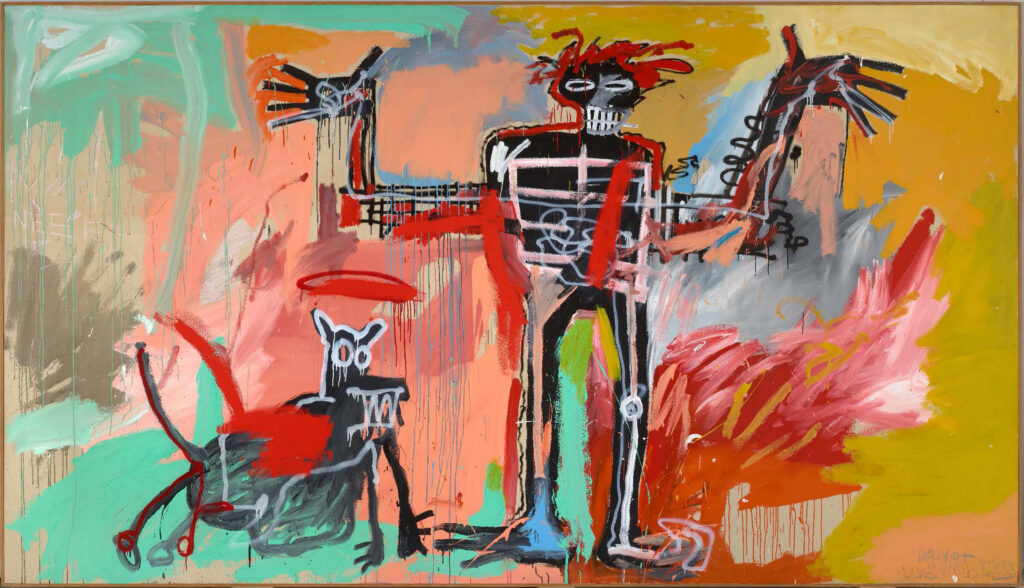
The North Carolina Museum of Art will present Basquiat × Banksy starting this month, pairing Jean-Michel Basquiat’s “Boy and Dog in a Johnnypump” (1982) with Banksy’s response, “Banksquiat. Boy and Dog in Stop and Search” (2018).
The exhibition marks the first time Banksy’s work has been shown at the NCMA and only the second time Basquiat’s art has traveled to the museum, following the 2011 exhibition “30 Americans.”
“We are excited to bring these two incredible works together,” said Katherine White, the museum’s interim director and CEO. “The show invites visitors to make connections between two artists whose ideas and artwork have shaped contemporary visual culture while exploring questions of identity, power and popular culture.”
Basquiat and Banksy: One Boy and His Dog, 36 Years Apart
Basquiat was just 22 when he painted “Boy and Dog in a Johnnypump.” Made with acrylic, crayon and spray paint, the large canvas shows a grinning, skeletal boy with his arms thrown up in the air beside a black dog, both surrounded by splashes of red, pink, ochre and green that drip down the canvas. The title refers to the New York slang for a fire hydrant. Open hydrants were a familiar summer scene for kids in Basquiat’s Brooklyn, and the painting’s bright colors suggest the heat of a city summer. The work reportedly sold privately for more than $100 million.
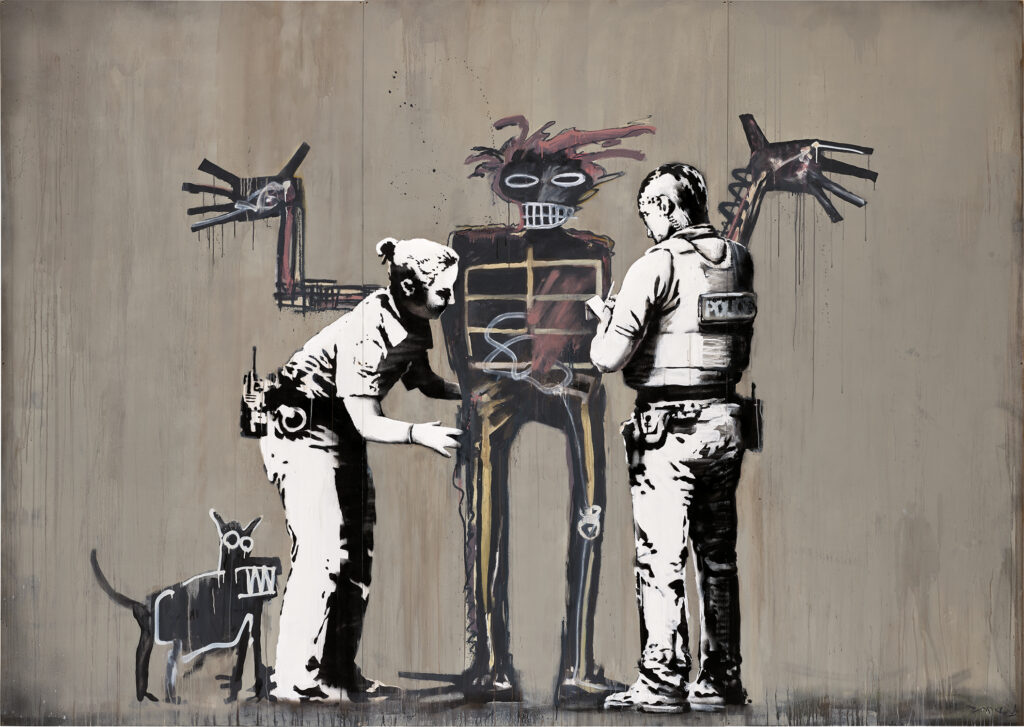
Banksy’s response to the painting began as a mural. In September 2017, as London’s Barbican Centre prepared to open Basquiat: Boom for Real, a major survey of the artist’s work, Banksy painted his own version of the boy and dog on a wall outside the venue. He kept Basquiat’s figures but drained away the color and the joy, adding two of his signature stenciled police officers who frisk the boy as he holds his hands up. Banksy later created a painted version of the piece, which is the one now on view.
Placed side by side, the works capture the same boy and dog more than three decades apart. Basquiat’s version is an image of play, while Banksy’s turns it into a pointed comment on policing and stop-and-search, highlighting the racial and social inequities that shaped Basquiat’s life and recur throughout his work.

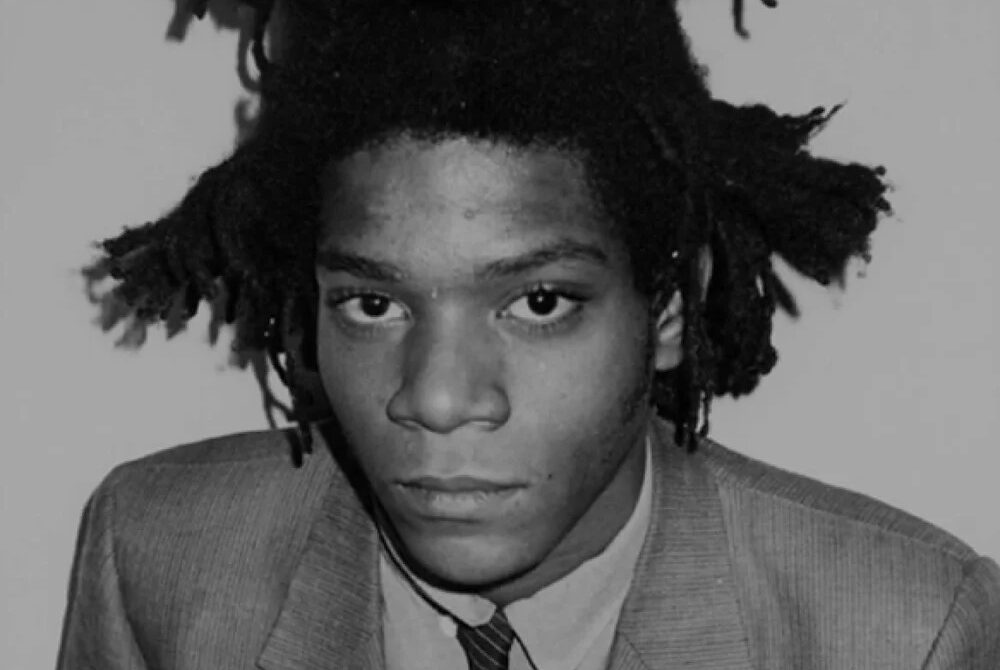
Basquiat rose from New York’s downtown scene in the late ’70s, first known for political, poetic graffiti signed SAMO, before becoming one of the most celebrated painters of the 20th century. His canvases, dense with words, symbols and collage, balance control and spontaneity, menace and wit. He died from an accidental heroin overdose in 1988 at age 27.
Banksy, the famously anonymous street artist, first appeared on trains and buildings around Bristol, England, in the early ’90s. His signature stencil style became known for sharp political commentary and pranks, including the 2018 auction stunt in which one of his paintings shredded itself moments after it sold. Renamed “Love Is in the Bin,” the half-shredded work sold again in 2021 for £18.6 million (about $25.4 million), his auction record.
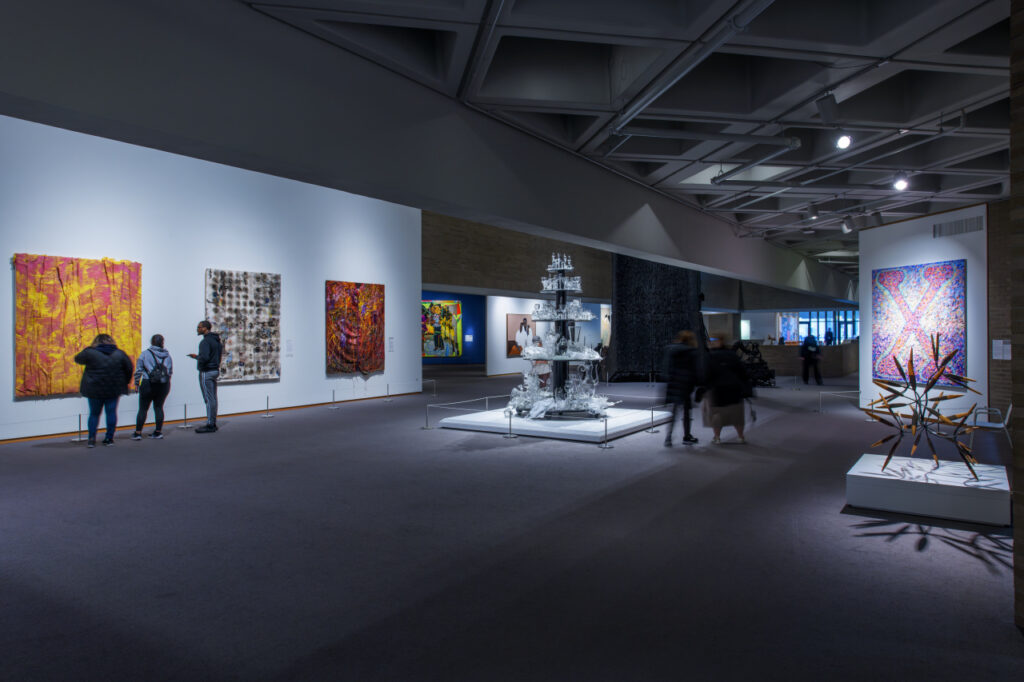
Basquiat × Banksy runs from November 22, 2026, through May 30, 2027, on Level A of the East Building at the North Carolina Museum of Art (2110 Blue Ridge Road in Raleigh), about a two-and-a-half-hour drive from Charlotte. Admission to the exhibition is free, as is admission to the museum’s permanent collection and Museum Park. For hours and exhibit details, visit the NCMA’s Basquiat × Banksy page, and check the museum’s events calendar for tours and programs during the show’s run.
View this post on Instagram
Images: Jean-Michel Basquiat, “Boy and Dog in a Johnnypump,” 1982. © Estate of Jean-Michel Basquiat. Licensed by Artestar, New York. Banksy, “Banksquiat. Boy and Dog in Stop and Search,” 2018. Courtesy of Pest Control. Images courtesy of the Hirshhorn Museum and Sculpture Garden, Smithsonian.


Read next:
 Charlotte Ballet: How a Dance Company Became a Charlotte Institution
 Charlotte jazz musician Phillip Howe is continuing Bill Hanna’s legacy and going viral with his unique approach to music education and theory
 Concord native Ryan Davis has built his career on his own terms, offering a blueprint for independent comedians and artists
 Charlotte Ballet Resident Choreographer Mthuthuzeli November’s passion for music and his homeland comes to life in ‘From Africa With Love’
 Hornets CMO Tyrel Kirkham wants to expand marketing efforts built around storytelling and cultural connection
 Gorillaz brought an ensemble, catalog-spanning set to Charlotte with Deltron 3030, Little Simz and Posdnuos
 Soul royalty The Womack Sisters, granddaughters of Sam Cooke and nieces of Bobby Womack, are coming to Charlotte in January
 From humble beginnings to esteemed accolades, Chef Robin Anthony’s journey is a truly unique Charlotte immigrant success story.
 Muggsy Bogues’ story is one of defying the odds, and his legacy extends far beyond the court
 Renowned film composer, multi-instrumentalist, and producer Hans Zimmer will perform in Charlotte for the first time in March
 LeVelle Moton and NCCU share timely ‘A Different World’-themed team intro video ahead of season
 Charlotte viral comedian Julian Cross wants to make the world a little better — and make you laugh
 Hannah Hasan’s poetry is rooted in family, embedded in community, and centered on the marginalized
 Leon Bridges announces 2027 tour following the release of his latest album produced by J Lloyd and Lydia Kitto of Jungle
 Roger Waters has announced a Pink Floyd Legacy Tour led by son Harry paying tribute to a golden era