 By
By June 25, 2026
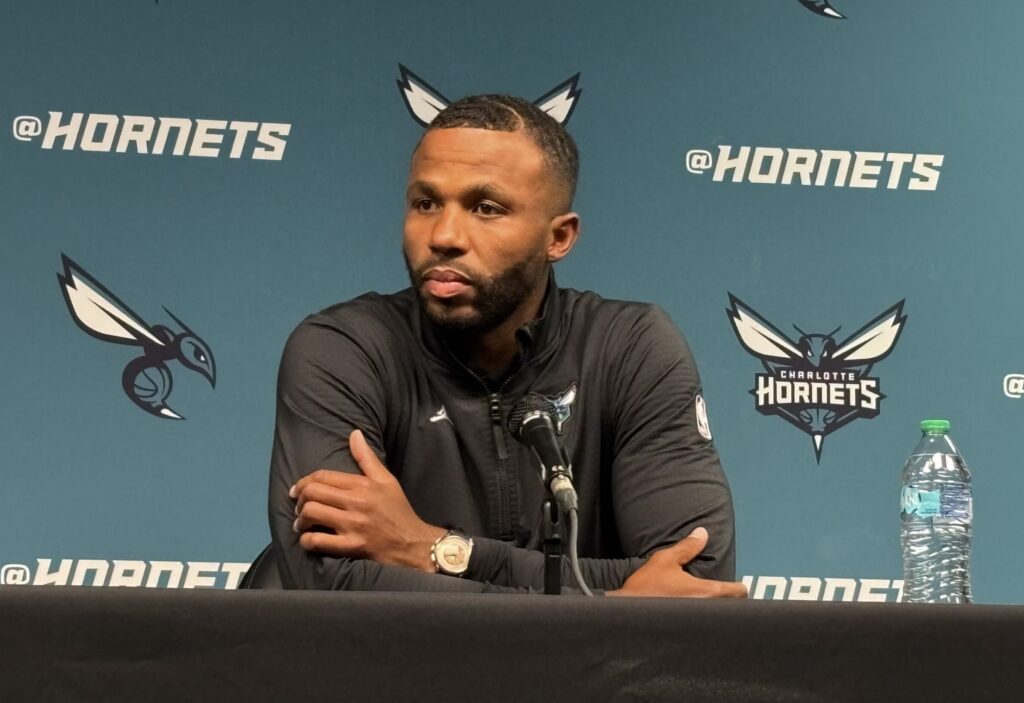
Photo: Alex Cason / CLTure
The Charlotte Hornets have stunned the NBA by trading LaMelo Ball and Josh Green to the Minnesota Timberwolves in exchange for Naz Reid, a 2033 unprotected first-round pick, three first-round pick swaps (2028, 2029, 2030), and three second-round picks (2029, 2032, 2033).

The city in shock, as Ball has been the face of the franchise since being drafted in 2020 and was one of Charlotte’s best players this past season. He served as the offensive engine behind an impressive second-half surge that turned the Hornets into one of the league’s hottest teams.
Understandably, there is confusion among fans. After years of standing by Ball through widespread criticism, it appeared that both the player and the organization were finally turning a corner. Ball had publicly committed to the franchise despite its struggles, making the decision to trade him all the more surprising.
View this post on Instagram
Possible Reasons Behind the Move
Injury Concerns
LaMelo Ball’s injury history, particularly with his ankles, is difficult to ignore. Although he played 72 games last season, he missed 56% of his games over the previous three seasons combined. Even when healthy last year, he dealt with soreness and spent stretches on a minutes restriction.
No organization knows Ball’s medical outlook better than Charlotte. This trade could represent a calculated bet against his long-term durability.
Overlapping Skill Sets
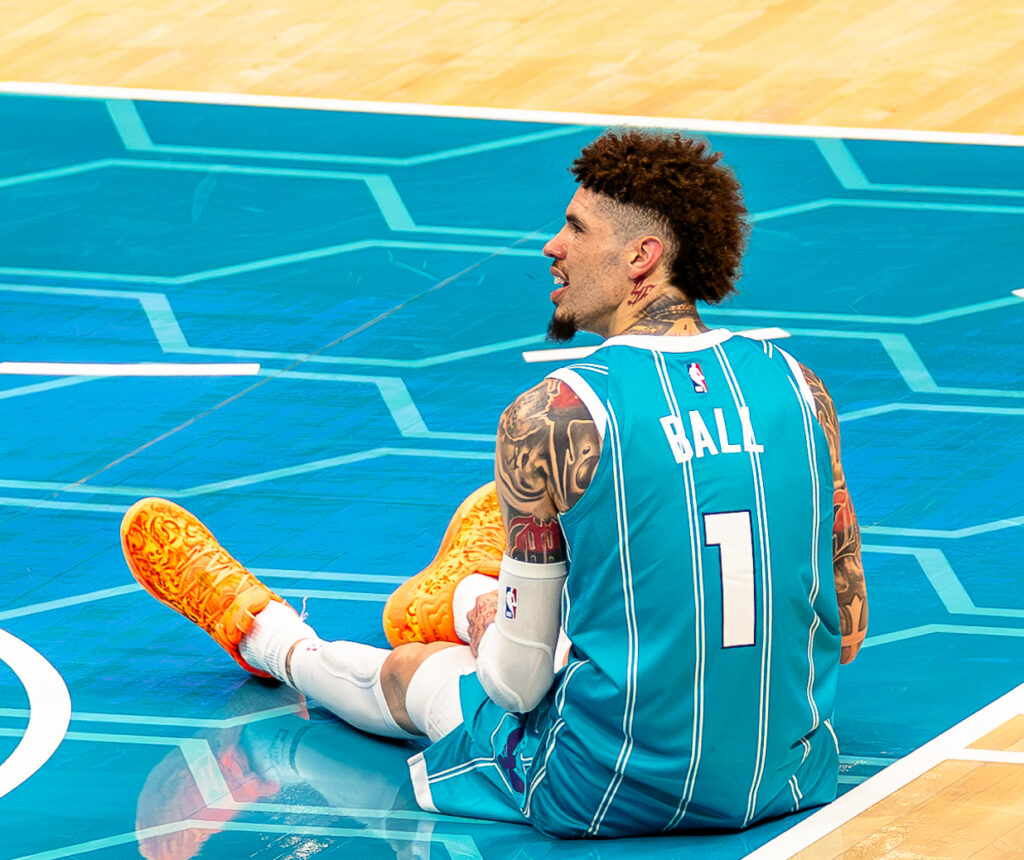
Ball’s strengths and weaknesses overlap significantly with those of Brandon Miller and Kon Knueppel. All three are perimeter-oriented scorers with question marks surrounding their defense, isolation efficiency, and ability to consistently pressure the rim.
Miller and Knueppel are both younger, cheaper, and play positions where high-end talent is genereally harder to find. From a roster-building perspective, the Hornets may have viewed Ball as the most expendable member of their core, especially after re-signing Coby White to a three-year, $74 million deal as a ready-made replacement, also drafting point guard Christian Anderson Jr.
Ceiling of the Current Core
There may also be a lack of belief that the Ball-Miller-Knueppel trio could develop into a true contender. Is that group capable of making a championship run? The Hornets appear to think not.
In today’s NBA, contention typically requires a top-15 player. Acquiring one often means stockpiling assets for a future trade, and Ball, given concerns around durability and development, may have been the logical piece to move.
Peak Trade Value
Ball’s contract value has fluctuated over time due to his availability. Following a relatively healthy 72-game season, his perceived value is likely as high as it has been in years. If his availability dips again, it’s unlikely Charlotte would ever receive an offer as strong as the package they received.
Limited Development
While Ball has improved since entering the league, the growth has been incremental rather than transformational. Concerns remain: defensive inconsistency, high turnover rates, inefficiency, limited rim pressure, struggles finishing inside, and inconsistent late-game control. While his leadership has improved, it may not be at the level expected of a franchise cornerstone entering his seventh season.
On his best nights, Ball’s creativity, shot-making, and vision are electrifying. On others, he can be inefficient, turnover-prone, or unavailable entirely. That volatility has defined both his career and his trade value, Charlotte may believe they sold at the peak.
Evaluating the Return
Naz Reid, a 26-year-old seven-year NBA veteran, is an offensively skilled 6’9” forward whose primary asset is floor spacing (career 37.1% from three). He’s also a fluid driver and capable secondary playmaker.
A former Sixth Man of the Year (2024), Reid has proven he can contribute at a high level, though he projects more as a low- to mid-tier starter than a foundational piece. Reid is under contract until 2030, making him either a potential long-term piece or a trade asset that could be flipped later this offseason.
The Hornets have the second most firsts among teams.
They create a $40.7M trade exception, the largest in league history. https://t.co/jidgIVc5vJ
— Bobby Marks (@BobbyMarks42) June 25, 2026
Draft Pick Compensation
The headline asset is the 2033 unprotected first-round pick — arguably one of the most valuable distant picks currently in circulation.
Minnesota is heavily committed to winning now, with no clear path to contention that far into the future. By 2033, their current core could be well past its prime. This pick is likely more valuable as a trade chip than a selection itself.
With Coby White and post LaMelo trade pic.twitter.com/jvFb5dz2c7
— Bobby Marks (@BobbyMarks42) June 25, 2026
With this addition, Charlotte now possesses one of the largest collections of future first-round picks in the league, armed to take a big swing at a star player.
Pick Swaps: Limited Practical Value
For a trade swap to convey, Charlotte must finish higher in the draft order (post-lottery) — something that currently appears unlikely with the current trajectory of both teams. The situation is further complicated by prior obligations: the Timberwolves already owe swap rights in 2029 (to Utah) and 2030 (to San Antonio). As a result, even if Charlotte finishes ahead of Minnesota, they would only receive the second-best pick between Minnesota and the respective team in those years.
The 2028 swap is the exception, carrying no such complications and therefore holding the most tangible value. Overall, however, the realistic upside for Charlotte benefiting from these swaps is fairly limited.
Trade Exception
Charlotte is also expected to generate a $40.7 million trade exception, the largest in league history. This would give them significant flexibility to absorb contracts and add talent without needing to send a matching salary in return.
For instance, they could target a starting-caliber center such as Jarrett Allen, absorbing his $28 million salary outright. Alternatively, they could use the exception more strategically by taking on unwanted contracts, such as Jerami Grant’s $32 million annual deal, which runs through 2028, in exchange for additional draft compensation.
We’ve seen this approach used effectively before, most recently when the Memphis Grizzlies leveraged a large trade exception to acquire Isaiah Stewart in a similar type of move.
Free agent guard Coby White intends to sign a three-year, $74 million deal to return to the Charlotte Hornets, sources tell ESPN. White was a major priority for the Hornets and now steps into a new starting role in the backcourt. pic.twitter.com/vomi9igMu5
— Shams Charania (@ShamsCharania) June 25, 2026
Coby White
Shortly after the trade, Coby White re-signed with the Hornets on a three-year, $74 million deal. Had Charlotte not traded Ball, there was a realistic possibility that White would have tested free agency and potentially left for nothing.
While this can’t be directly counted as part of the trade return, it is a related benefit worth noting. That said, it’s difficult to fully evaluate — there remains a chance White would have re-signed regardless of Ball’s presence on the roster.
In 21 games with the Hornets last season, White averaged 15.6 points, three rebounds, and three assists per game while shooting 46.1% from the field and 36.1% from three-point range in a bench role. Compared to Ball, he provides stronger rim pressure, though he does not offer the same level of playmaking.
Prior to being traded to Charlotte, White spent two seasons as a starter for the Chicago Bulls, where he averaged 19.7 points, 4.1 rebounds, and 4.8 assists per game. During that span, he shot 45% from the field and 37% from three-point range, helping lead the Bulls to consecutive play-in tournament appearances. He is currently ranked as the 27th-best point guard, according to The Ringer’s NBA player rankings

The Bigger Picture
Ownership and the front office will emphasize asset accumulation, long-term team building, flexibility, and roster fit when explaining this decision to fans. While those arguments may all hold merit, they won’t say the quiet part out loud.
At its core, this move signals a loss of belief in Ball as the player who could lead the Hornets to genuine contention in the Eastern Conference. If they still believed he could be that cornerstone, they simply would not have traded him for this package.
Ultimately, the Hornets are making two central bets: LaMelo Ball will either struggle to stay healthy or fail to address key weaknesses in his game, and the Timberwolves’ long-term outlook will decline, making their future assets more valuable.
If either, or both prove correct, this trade could age well. However, if Ball thrives in Minnesota and the Timberwolves become a Western Conference powerhouse, while Charlotte fails to convert its assets into a championship-caliber roster, this move will be remembered as an unnecessary failed gamble.
A bold swing — one that could just as easily set the franchise back as propel it forward. Let’s see what the next move for Jeff Peterson and the Hornets will be.
Read next: