 By
By June 29, 2026
Photo: Kurt Shackelford / CLTure
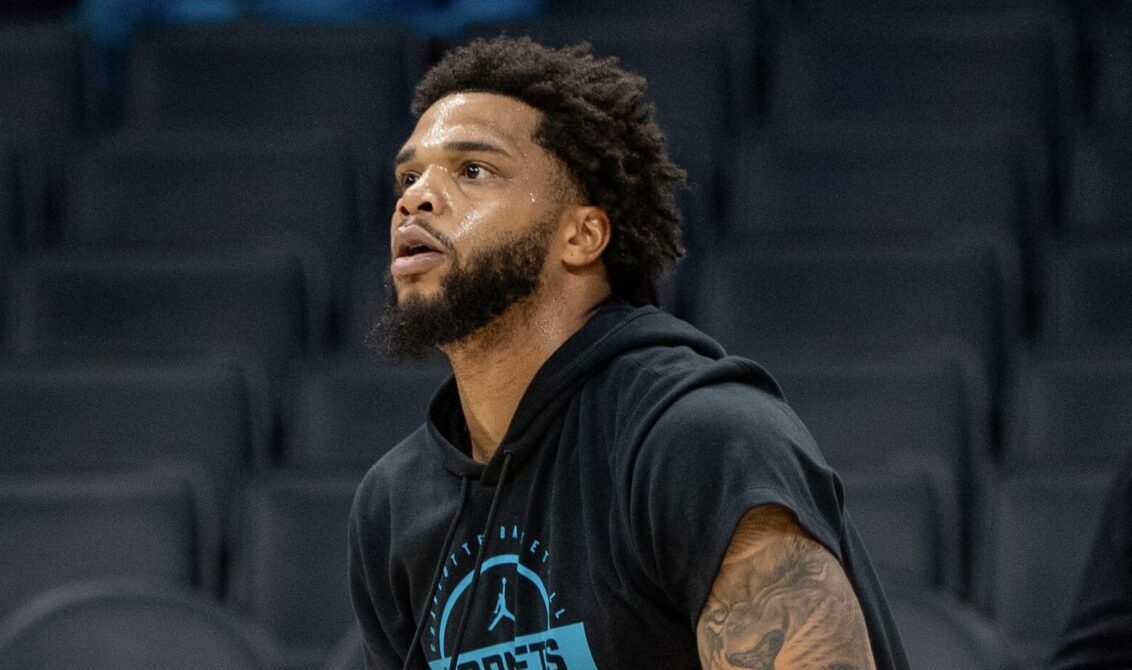
After seven seasons and 501 games — good for fourth-most in franchise history — the Hornets are moving on from their longest-tenured player. Miles Bridges, once a cornerstone of Charlotte’s core (R.I.P. Air BnB), will be suiting up elsewhere next season.

Bridges’ time in Charlotte was defined by on-court production, off-court controversy, and a lack of winning. His presence remained divisive among segments of the fanbase following his 2022 arrest for domestic violence. He missed the entire 2022-23 season after entering a no-contest plea and later served a 30-game NBA suspension. When he returned, his elite explosiveness wasn’t quite the same, but his overall level of play remained relatively steady. After a prolonged restricted free agency standoff, Bridges ultimately re-signed with the Hornets on a three-year, $75 million deal in 2024.
Selected with the 12th pick in the 2018 NBA Draft out of Michigan State, Bridges was acquired on draft night in a trade with the Clippers that swapped Shai Gilgeous-Alexander (11th pick) and two second-round picks. Throughout his seven seasons in Charlotte, Bridges was one of the franchise’s most durable, versatile, and entertaining players on the court. In his 2021-22 season, prior to entering unrestricted free agency, he started 80 games and averaged 20.2 points on 49.1% shooting with 7.0 rebounds and 3.8 assists per game.
Bridges is the last remaining player from the previous regime outside of Brandon Miller (who was drafted in 2023), and Charlotte has now traded him to the Phoenix Suns, where he’ll reunite with former Hornets teammate Mark Williams. The move marks the fourth deal between the Hornets and Suns in the past 18 months.
Breaking Down The Trade
Outgoing:
- Miles Bridges ($22.8 million)
- 2029 1st-round pick (least favorable of UTA/CLE/MIN)
- 2027 2nd-round pick (least favorable of BOS/UTA)
BREAKING: The Charlotte Hornets are trading Miles Bridges, a 2029 first-round pick and a 2027 second-round pick to the Phoenix Suns for Grayson Allen, Royce O’Neale and a 2033 first-round pick, sources tell ESPN. pic.twitter.com/vjcR7AdwSD
— Shams Charania (@ShamsCharania) June 28, 2026
Incoming:
- Grayson Allen ($18.1 million)
- Royce O’Neale ($10.8 million)
- 2033 1st-round pick (unprotected)
Key Outcomes for Charlotte:
Clearing the Power Forward Logjam
Following the draft and the LaMelo Ball trade, Charlotte now has a crowded power forward rotation featuring Naz Reid, Hannes Steinbach (who can also play center), Grant Williams, and Tidjane Salaun. With Reid expected to start, keeping a longtime starter like Bridges in a reduced bench role risked creating friction while also limiting development opportunities for younger players.
Upgrading Future Draft Capital
At first glance, this deal appears to be a simple swap of first-round picks, with Charlotte also including a second. However, the protections significantly alter its value. The outgoing 2029 first-round pick is the least favorable of the selections from Utah, Cleveland, and Minnesota — three teams expected to remain competitive over the next few seasons. That makes it likely the pick will fall in the late teens or 20s.
I can’t stress enough how much more valuable the 2033 first round pick is than the outgoing 2029 first.
I’m also certain Charlotte will use that 2033 pick in a trade long before the draft, so don’t worry about having to wait until 2033 for it to have value.
— James Plowright (@British_Buzz) June 28, 2026
In contrast, Phoenix’s 2033 first-rounder is completely unprotected. With the Suns currently all-in around Devin Booker and possessing limited long-term flexibility, there’s a strong possibility that this pick could become highly valuable. By most projection models, distant unprotected picks from top-heavy teams carry significant upside.
For Charlotte, this further strengthens an already impressive stockpile of draft assets, giving the franchise even more flexibility to pursue a future trade for a star player.
Adding Veteran Depth
Prior to the trade, Charlotte’s backup wings projected to be Sion James and Liam McNeeley, both still early in their development and only an injury away from being thrust into the starting lineup.
Grayson Allen provides immediate stability as one of the league’s most reliable shooting wings, with a career 40.3% mark from three-point range. Capable of playing both shooting guard and small forward, Allen is also familiar with head coach Charles Lee from their time together in Milwaukee.
While durability has been a concern and he enters his age-31 season, Allen’s ability to contribute both on and off the ball as a floor spacer makes him a strong rotational piece for a second unit that struggled to score consistently last season.
Royce O’Neale, who went undrafted out of Baylor in 2015, has carved out a lengthy NBA career as a physical, defensive-minded forward. Although his lateral quickness has declined with age (33 years old), he remains a smart team defender and has shot better than 40% from three-point range in each of the last two seasons. His versatility, toughness, and veteran experience provide valuable depth to the forward rotation.
What’s the catch?
If the Hornets keep both Allen and O’Neale, the primary downside of this trade is a reduction in Charlotte’s financial flexibility heading into the 2027 offseason. Bridges was set to come off the books next summer, while O’Neale has $11.6 million guaranteed for 2027-28 and Allen holds a $19.3 million player option that he is very likely to exercise.
Before the deal, the Hornets projected to have up to $46 million in cap space. This trade adds roughly $31 million in salary for the 2027-28 season, limiting their flexibility — though that same financial pressure is a key reason Phoenix agreed to the deal, given their looming luxury tax concerns.
Hornets roster post Bridges trade
* Flexibility to continue adding to the roster
* Massive TE from the LaMelo trade
* Loaded with 1st rd. picks, including two unprotected firsts in 2033 (via Minnesota and Phoenix)Hornets could also have 3 firsts in next years draft also. pic.twitter.com/O9sx7vIWQC
— Bobby Marks (@BobbyMarks42) June 28, 2026
The loss of Bridges is significant, as he had grown into a locker room leader and ranked second on the team in minutes per game, behind only Kon Knueppel. His athleticism, ability to punish switches, attack the rim, and provide on-ball defensive versatility are traits Charlotte will struggle to replace.
Final thoughts
Overall, Charlotte secured a strong return for Bridges, who was a challenging trade asset due to past off-court issues and an extension on the horizon. Adding two experienced rotation players improves roster balance in the short term, while the upgraded future pick strengthens their position to pursue a star who becomes available in the near future.
View this post on Instagram
Read next: