 By
By September 28, 2026
Photo: Alex Cason / CLTure
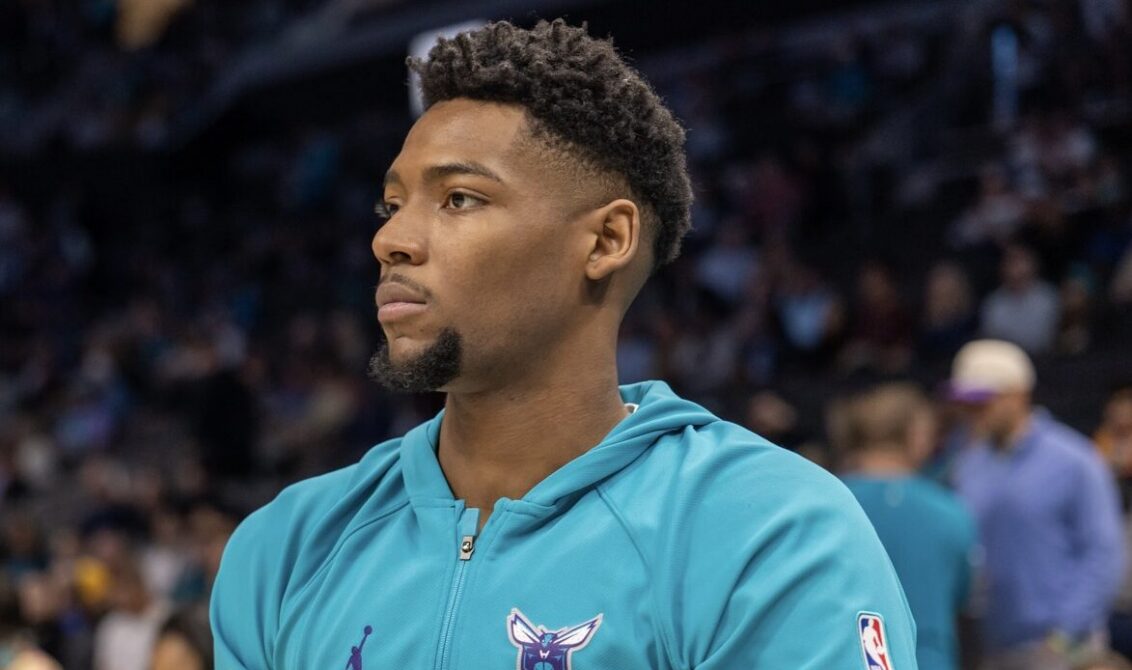
After a long offseason that saw a record number of transactions for Jeff Peterson and the Hornets, the 2026-27 NBA season is quickly approaching. Following the franchise’s most thrilling campaign in more than a decade, during which Charlotte went 18-9 after the All-Star break while posting a 121.8 offensive rating, 110.6 defensive rating and +11.1 net rating, the future looked bright despite a tough loss to Orlando in the Play-In Tournament. Now, the roster looks significantly different, new faces have arrived and several important questions remain unanswered as the season approaches.

Here are five of the biggest questions that could define the Hornets’ 2026-27 season:
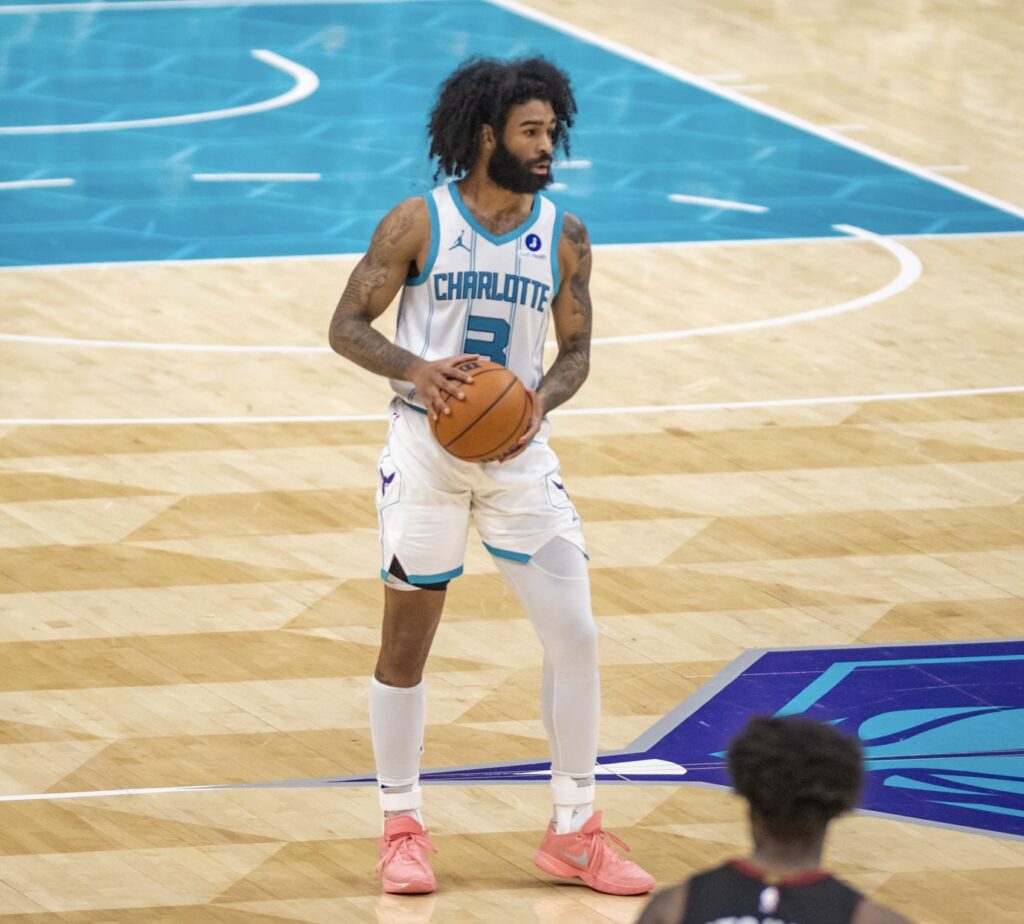
How will Coby White as the starting point guard change the on-court dynamics?
On paper, the Hornets have already addressed the LaMelo Ball vacancy with Coby White returning to Charlotte after signing a three-year, $74 million contract as a proven scorer, an increasingly reliable decision-maker, and a player entering the prime years of his career. Replacing Ball’s production, however, is not the same thing as replacing his impact, and that could be a challenge heading into the season.
The Hornets’ remarkable second-half surge last year coincided with Ball finally enjoying a sustained period of health and playing arguably the most complete basketball of his career. Ball was the primary engine, whether it was pushing the tempo, creating shots for teammates or carrying the offense through difficult stretches, although he did have his flaws, playing erratically at times and finishing the season shooting just 40.7% from the field.
White is unlikely to replicate Ball’s style of play, particularly as a distributor, as he does not possess the same combination of size, vision and creativity, but few players in the league do. Instead, White brings a different form of offensive creation and efficiency — one that Charlotte has lacked and that fits well alongside Knueppel and Miller’s floor spacing.
White places significantly more pressure on the rim. Last season, just 16% of Ball’s shot attempts came at the basket, where he converted 57% of those opportunities. White, by comparison, took 28% of his shots at the rim and converted 67% of them. That willingness to consistently attack the paint forces defenses into difficult decisions. Rather than creating advantages primarily through playmaking, White creates them by collapsing defenses, forcing rotations and opening opportunities for himself and his teammates.
White may not rack up assists in the same fashion as Ball, but his downhill pressure creates quality looks for teammates and puts constant stress on opposing defenses. Those kick-out passes do not always lead directly to shot attempts, but they frequently trigger the chain reaction that produces efficient offense.
White quickly established himself as a steady decision-maker in high-leverage moments, an area where Charlotte often struggled. The Hornets finished just 10-18 in clutch games last season, one of the poorest records in the NBA. If the Hornets take another step up the Eastern Conference standings, late-game execution must improve. White has already shown flashes that suggest he can help solve that problem, including delivering one of the most memorable shots in recent franchise history.
While the weight of replacing Ball’s impact will fall heaviest on White’s shoulders, he shouldn’t have to bear it alone. Brandon Miller, Kon Knueppel and Naz Reid should all take on increased responsibility for generating offense, but none of those players can be trusted as primary ballhandlers at this stage of their careers, so all eyes will be on Coby White.
Miller’s offensive usage should increase considerably, Knueppel will be asked to create more than he did as a rookie, and Reid arrives with expectations of being another key offensive option. Nevertheless, White enters the season as the player most directly tasked with replacing Ball’s possession-to-possession responsibilities.
Can Naz Reid step up his role as more than a elite sixth man?
Few players have done more in recent years to define the value of a sixth man than Naz Reid. He won Sixth Man of the Year in 2023-24 and continued to establish himself as one of the league’s most versatile and productive bench weapons, earning recognition among the league’s top reserves in the seasons that followed. The question facing Charlotte now is whether there is another level beyond that role.
The Hornets clearly believe so. Reid was one of the centerpieces of the Ball trade, and teams generally do not make that kind of investment unless they believe additional growth remains untapped. Charlotte is betting that his future is bigger than simply providing instant offense off the bench.
The raw numbers offer an encouraging starting point. If Reid’s 2025-26 production is scaled from 26.1 minutes per game to 32 minutes, his averages rise to roughly 16.7 points, 7.6 rebounds, 2.7 assists, 1.2 steals and 1.2 blocks per game. Those numbers would compare favorably with many established starting frontcourt players around the league and help justify why Peterson was so eager to acquire him.
At 27 years old, 6-foot-9 and 264 pounds with a 7-foot-3 wingspan, Reid combines size and physicality with an offensive versatility that few frontcourt players possess. He can stretch the floor, attack closeouts, put the ball on the deck and create his own shot, giving Charlotte an entirely different dimension in the frontcourt. His physical presence should also help address an area of need for the Hornets after they spent much of last season relying on the undersized 6-foot-7 Miles Bridges at power forward. Charlotte’s offense often grinded to a halt in the half court, particularly against more physical opponents, and Reid’s ability to score in a variety of ways should help alleviate some of those issues.
While Reid is not an elite athlete by NBA standards, he brings a level of strength and two-way versatility to the power forward position that Charlotte has lacked in recent seasons. He is comfortable battling larger centers in the post and regularly holds his own against some of the league’s most powerful interior scorers.
Naz Reid incredible post defense on Nikola Jokic, wow pic.twitter.com/o8uTyFmxqb
— Timberwolves Clips (@WolvesClips) May 7, 2024
Reid should improve Charlotte’s ability to create turnovers and generate transition opportunities, an area where last season’s team struggled significantly, finishing 28th in the league. He averaged 3.5 deflections per 36 minutes, more than double Miles Bridges’ mark, while his activity level consistently disrupts passing lanes and creates extra possessions. He’s also developed into an underrated rim protector, blocking 3.6% of opponents’ shot attempts while on the floor compared with Bridges’ 2.2%. With his defensive versatility and willingness to do the physical work, Reid should give the Hornets a much-needed defensive edge in the frontcourt.
His playoff résumé also deserves attention. Across 43 postseason appearances over the last three years, Reid averaged 11.3 points and 5.1 rebounds in just 24.6 minutes per game while shooting 39% from 3-point range and 58% from 2-point range. Those numbers become even more impressive when viewed through the lens of his competition. Reid was regularly tasked with difficult defensive assignments, including spending significant stretches matched up against Nikola Jokic. Many bench players see their effectiveness diminish when the playoffs arrive, but Reid’s production largely carried over.
But there is some uncertainty surrounding Reid that many Hornets fans may not realize, as he has spent his entire NBA career in Minnesota. Most players entering their age-27 season have already experienced multiple organizations, coaching staffs and systems. Those experiences help teams understand which aspects of a player’s success are transferable and which are context-dependent.
The Hornets are betting that the skills Reid displayed in Minnesota will translate seamlessly into a larger role under different circumstances, but there is also the possibility that some of his success was tied to a system and fit that maximized his strengths. That uncertainty is ultimately what makes Reid one of the most fascinating players on the roster.
Will Kon Knueppel or Brandon Miller take a big leap?
Whether the Hornets can accelerate their rebuild this season will depend on the development of Miller and Knueppel.
Knueppel is coming off one of the most efficient rookie shooting seasons in NBA history, while Miller had a career year after playing through a shoulder injury for most of last season. For the Hornets to move from an intriguing young team to a genuine playoff threat, Miller and Knueppel will likely need to make significant leaps forward.
For Knueppel, the challenge isn’t proving he can shoot — he already did that. The bigger question is whether he can maintain that efficiency while taking on a larger offensive role. Last season, his success came with the fourth-lowest usage rate among the starting unit, behind Ball, Miller and Bridges. This season, he is expected to spend more time creating offense with the ball in his hands.
If Knueppel can successfully expand his on-ball game without sacrificing the efficiency that made him so effective as a rookie, he could develop into one of the league’s most difficult offensive players to defend. However, a hamstring injury that will keep him out of training camp and the preseason could delay that progress early in the year.
Miller faces a different challenge.
Working his way back from shoulder surgery, there will be added pressure on Miller to carry a larger share of Charlotte’s scoring and playmaking burden early in the season.
But the first area to watch this season, if the Hornets have a shot at making the playoffs, is his defense. At 6-foot-7 with a 7-foot-1 wingspan, Miller possesses all the physical tools needed to become a high-level wing defender. Strength has often been the factor holding him back against more physical opponents, and any signs of improvement in that area will be a positive development for both Miller and the Hornets.
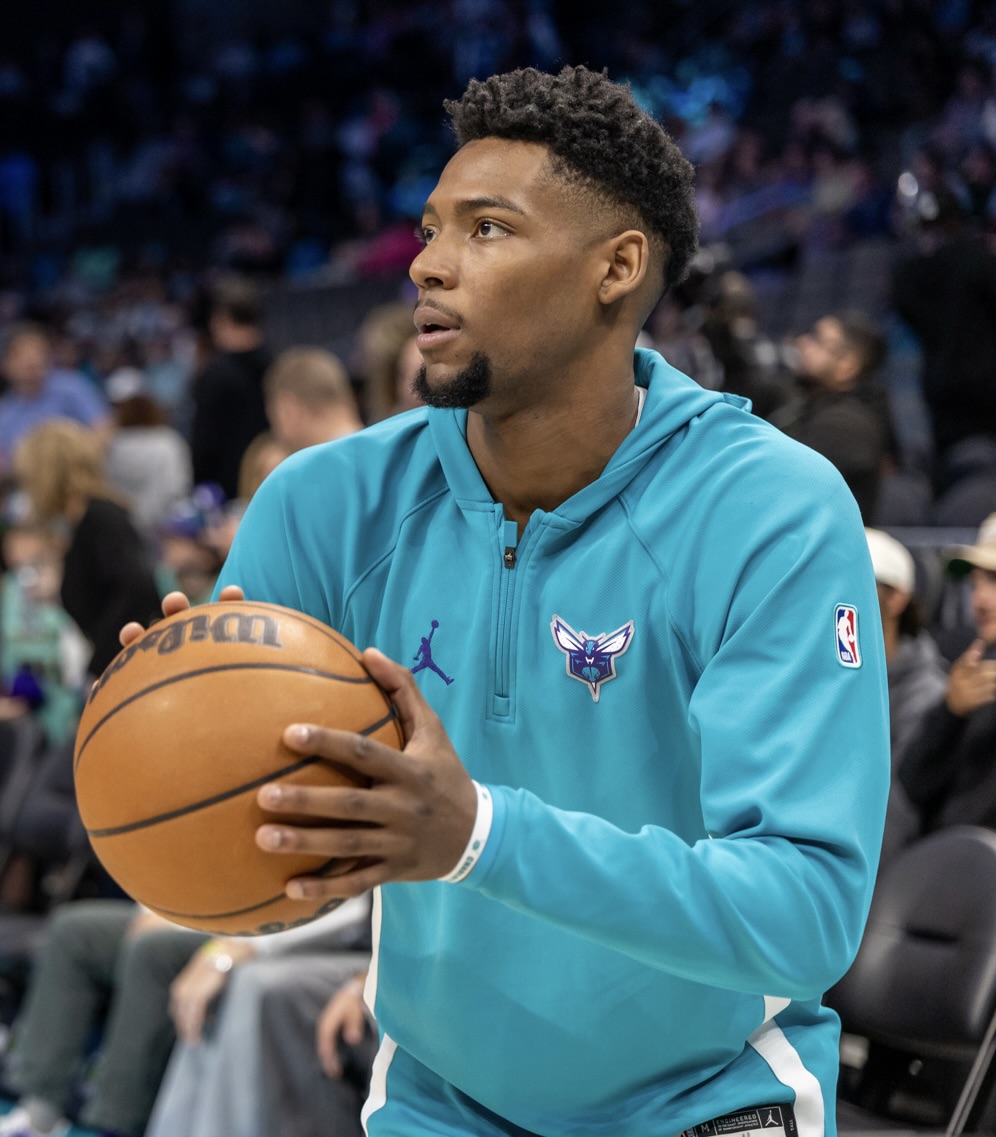
The second is scoring versatility. Miller has already established himself as one of the NBA’s better young three-point shooters, but there is still room for growth inside the arc. Among players averaging at least 1.5 isolation possessions per game last season, Miller ranked second-to-last in field-goal percentage at just 34.9%.
Despite his ability to finish above the rim in transition, he has yet to consistently pressure defenses in half-court situations. Only 17% of his shot attempts came at the basket, limiting both his efficiency and his opportunities to get to the free-throw line. Finding ways to create easier scoring opportunities could unlock another level in his offensive game.
The final area is playmaking. Miller’s passing has steadily improved, but his decision-making can still become rushed against aggressive defenses. As opponents increasingly focus their game plans around slowing him down, his ability to make quick reads and punish extra defensive attention will become even more important. Improving on his 1.33 assist-to-turnover ratio would be a strong indication that part of his game is evolving.
If Knueppel proves he can take on more creation responsibilities while maintaining elite efficiency, and Miller takes a significant step forward as a defender, scorer and playmaker, the trajectory of the franchise could change considerably. The Hornets have invested heavily in the development of both players and this season will provide the first real indication of which one is ready to emmerge as Charlotte’s next franchise player.
Can the Hornets turn depth into their greatest strength?
Perhaps the most underrated accomplishment of Charlotte’s offseason was not adding star power, but improving the overall quality of the roster from top to bottom.
Much of the attention has understandably focused on the Ball and Bridges trades, yet the Hornets quietly assembled one of the deeper rosters they have had in several years. A projected second unit featuring Dennis Schröder, Grayson Allen, Royce O’Neale, Grant Williams and Ryan Kalkbrenner has combined for 1,248 regular season starts. That level of experience is rare for a backup group, especially in Charlotte, and provides significantly more protection against injuries than the team has had in recent seasons.
The depth extends even beyond the second unit, as Sion James started 19 games and played in all 82 last season but could now be competing for a regular rotation spot. Liam McNeeley appeared to make progress during Summer League and could also work his way into the rotation. The Hornets’ No. 14 pick in the draft, Hannes Steinbach, has significant upside in areas of need, particularly on the glass, and could play meaningful minutes from the start. Players who begin the year outside the regular rotation, such as Tidjane Salaun and Christian Anderson Jr., possess intriguing long-term potential and could earn opportunities if circumstances open the door during the season.
The importance of depth cannot be overstated. As the modern NBA continues to increase in speed and physical demands, lower-body injuries have also become increasingly common.The Hornets have spent years discovering how difficult the regular season can be when injuries begin to pile up. They now appear much better equipped to survive those stretches and stay out of the NBA’s new “Relegation Zone” in the lottery. While depth may not play as big a factor in the playoffs, it is essential for carrying teams through the regular season, better positioning them down the final stretch.
Will the Hornets extend Brandon Miller before the deadline?
Brandon Miller became extension-eligible on July 1, yet public reporting around negotiations has remained notably quiet. That silence should not necessarily be interpreted as a warning sign. Since the ownership transition, Charlotte has shown a markedly more disciplined approach to contract negotiations. The Hornets and Peterson seem to prefer patience and careful evaluation rather than rushing into extensions. Miller and the Hornets have until October 19 to reach an agreement on a rookie-scale extension before he enters the final year of his rookie contract. If no deal is reached, Miller would become a restricted free agent following the 2026-27 season, with the Hornets retaining the right to match outside offers in the offseason.
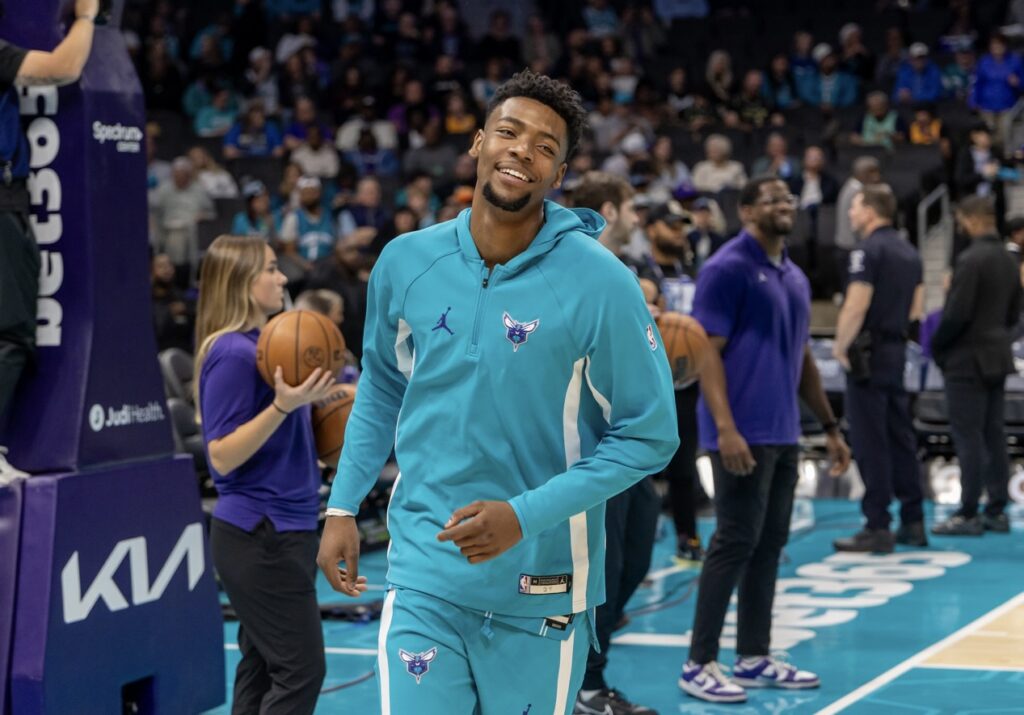
The challenge is that Miller is not the type of player organizations typically want to play hardball with. Wings with legitimate All-Star upside remain among the most valuable assets in the league. Despite dealing with a shoulder injury throughout last season, Miller has largely lived up to the expectations that came with being selected second overall. There is a legitimate argument that he is already the best player on the roster, and an even stronger one that he remains the organization’s most important long-term building block.
A deal in the range of $180-$200 million over five years feels like the likely baseline. From Charlotte’s perspective, caution is understandable, as Miller is still projecting toward his first All-Star appearance rather than negotiating after one. Following consecutive summers impacted by surgery naturally creates some uncertainty.
Miller’s side, however, has a compelling case of its own. A healthy season with expanded offensive responsibilities could place him firmly in the All-Star conversation and dramatically strengthen his leverage heading into restricted free agency in 2027.
Both sides have logical arguments, and neither appears under immediate pressure to compromise. If an extension ultimately happens, the most likely scenario remains a last-minute agreement shortly before the deadline.
It was an unexpected offseason following a thrilling stretch last season that helped galvanize a hungry fanbase looking for its first playoff berth in over a decade. Now, the Hornets move beyond the Ball chapter with a revamped roster, several new faces and plenty of questions to answer on the court.
Peterson has repeatedly emphasized “sustainable success,” and the franchise now has more assets and flexibility than ever, giving them the ability to make significant moves in the trade market and future drafts. While the team will be without its once most marketable star, they still have marquee players in Miller, Knueppel and White, along with an elite level of depth and three-point shooting.
The challenge now is turning that flexibility and depth into a sustainable foundation for winning.
The preseason kicks off on October 6 against the Brooklyn Nets at Spectrum Center, and the Hornets’ Purple and Teal Day will take place on Saturday, October 10. Check out the full 2026-27 Charlotte Hornets schedule.
View this post on Instagram
Read next: