 By Cameron Lee
May 19, 2026
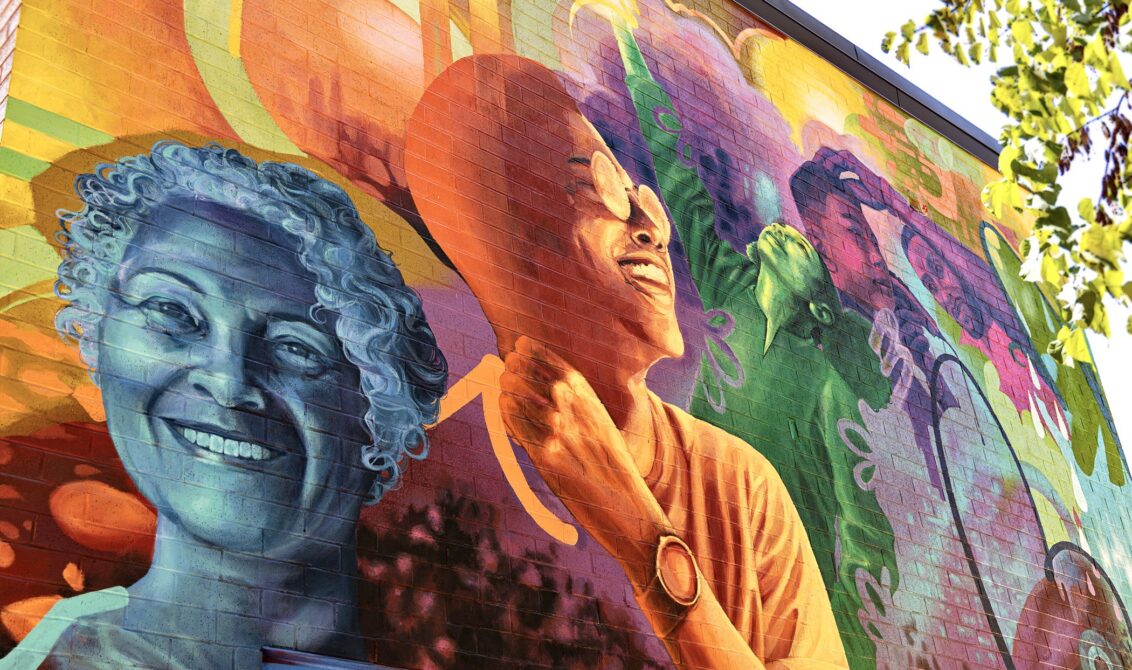
Cover Photo: “Generations of Growth” by Bree Stallings
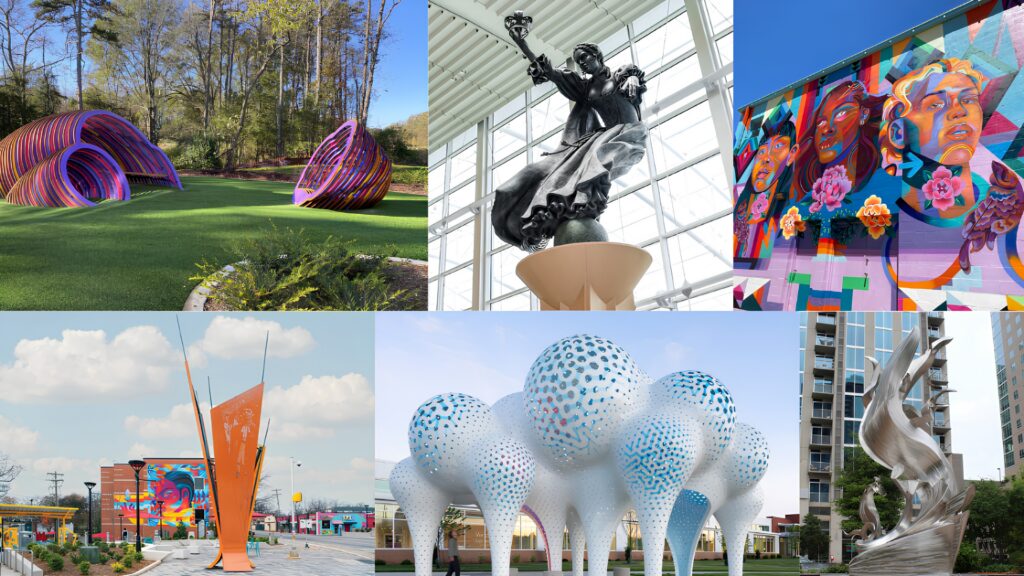
Since 2020, the Arts & Science Council has managed a regional directory designed to expand the pool of creators across North and South Carolina eligible for site-specific public art projects in Mecklenburg County. The program has helped beautify fire stations, recreation centers, parks, and greenways across Charlotte with radiant murals, sculptures, and community-driven storytelling that add character and identity to public spaces throughout the region.

While the Charlotte-Mecklenburg Public Art Program was established in 1993, it wasn’t until 2003 that Mecklenburg County and the City of Charlotte adopted their Percent for Art ordinances to appropriate one percent of eligible capital improvement projects to fund public art. It is an age-old European model that was brought to the United States in the late ’50s, first in Philadelphia as the country’s first municipal Percent for Art ordinance, and later in cities like Baltimore, San Francisco, Seattle, and New York City.

The idea is simple: when governments spend money building public facilities — parks, libraries, transit stations, streetscapes, and government buildings — a small percentage of that construction budget is reserved for public art.
Todd Stewart, Vice President of the Public Art Program, who has been with ASC for over 12 years, says they manage anywhere from 31 to 42 projects a year, bringing on 8 to 12 new public works annually.
“So over the next couple of years, we are seeing trends still keeping kind of strong,” Stewart said. “Yeah, it’s growing… particularly through Mecklenburg County, they’ve seen a drastic increase in their capital improvement program, like a lot of renovations to parks and rec centers and things like that, which are eligible for public art commissions.”
The Regional Artist Directory serves as the primary database used to identify artists capable of creating public artworks for the city, county, and even private development projects. To apply, artists must reside in North Carolina or South Carolina and submit an application demonstrating experience with site-specific artwork, community-based design, or place-based public art, along with a statement of interest highlighting collaboration with designers, architects, and community members — in either written or video format.
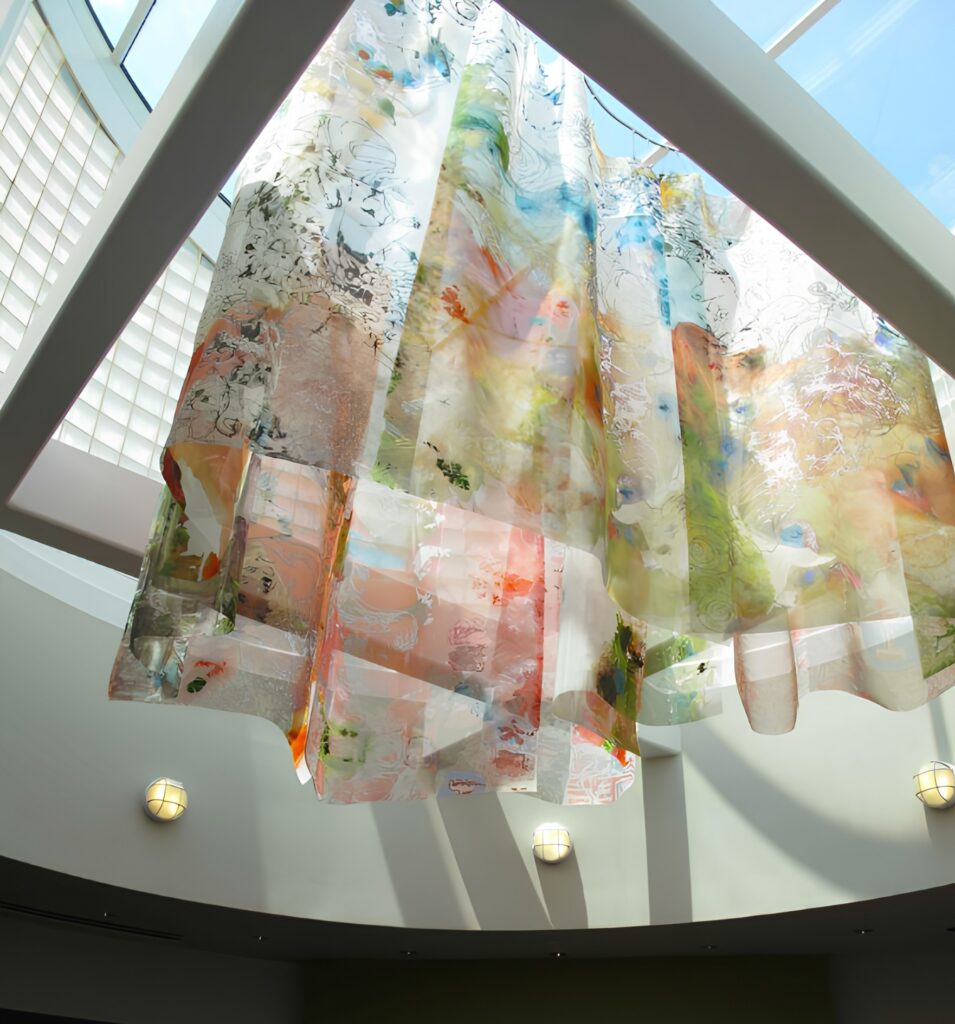
After applications are initially screened by ASC staff, they are reviewed by a panel of arts professionals and community stakeholders, who then prequalify artists for public art projects with budgets up to $100,000. The deadline for 2026 is Monday, June 1 at 11:59 p.m., and there is no application fee.
While ASC does not partake in the final selection process for individual commissions, they are involved in the creative and logistical workflow once a project receives the green light. Randella Davis, Program Director for ASC’s Public Art Program, says she is particularly fond of works that bring neighborhoods together.
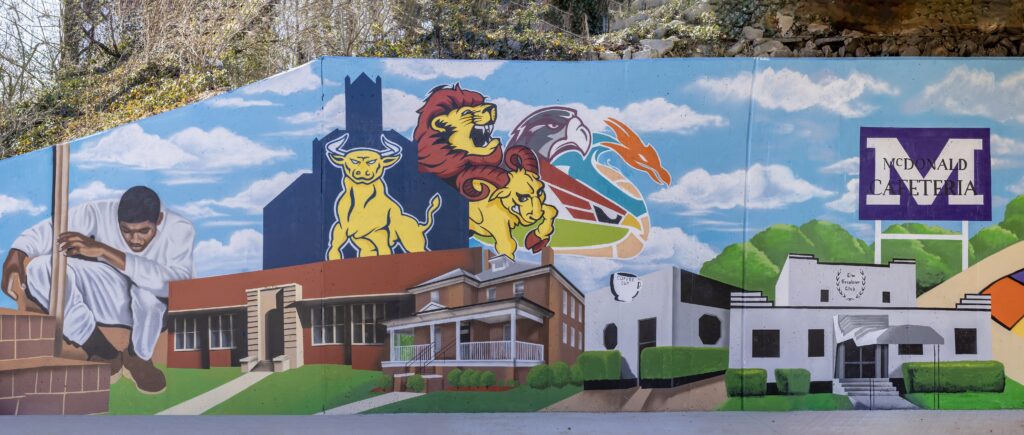
“All of our projects require community engagement, and so I tend to love the ones where the artist really connects with the community,” Davis said. “My absolute favorite project is the Stewart Creek Greenway by Abel Jackson. The community actually got to come out and help paint… there were church members and neighbors and friends… then they had the music going. So it was a really good experience for everybody.”
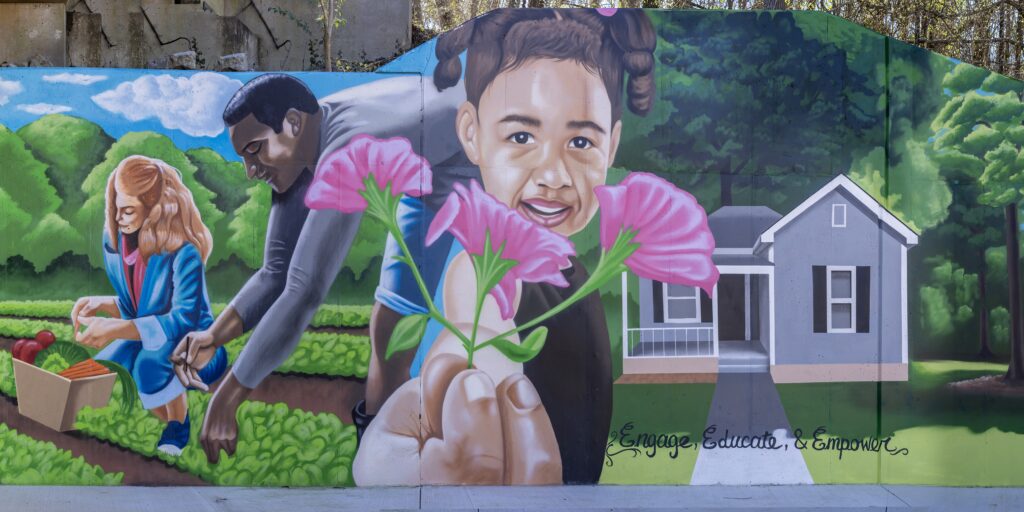
The mural Davis refers to is called “Westside Unity,” and it pays homage to the history of Charlotte’s West Side with images of historic buildings, schools, and neighborhood figures, located at the underpass of the State Street Trailhead on the Stewart Creek Greenway.
Davis, who manages a large number of Mecklenburg County projects, says the creative process for each project is extensive but collaborative. Teams meet with stakeholders and architects to determine available space, then the artist is brought in to discuss concepts, scale, and visual storytelling — creating a collective workflow.

Justin Hicks, Program Officer for the ASC’s Public Art Program and illustrator himself, says he has enjoyed being involved in the process of renowned artist Maxwell Emcays’ sculpture at the newly redesigned and rebranded Latta Place (set to reopen later this year), which serves as a memorial honoring the more than 60 enslaved individuals who once lived on the land.
“It’s been really exciting to see him [Emcays] develop this work, especially in relation to the historical connection to the 65 enslaved individuals,” Hicks said. “The way the piece tells that story is particularly powerful. He’s also a strong example of an artist who understands not just the conceptual side, but the mechanics, structure, and form to ground the ideas of his work as well.”
It’s another strong example of how art can not only enhance the aesthetic of public spaces but also tell meaningful stories that help teach us about the deep heritage and roots of a city.
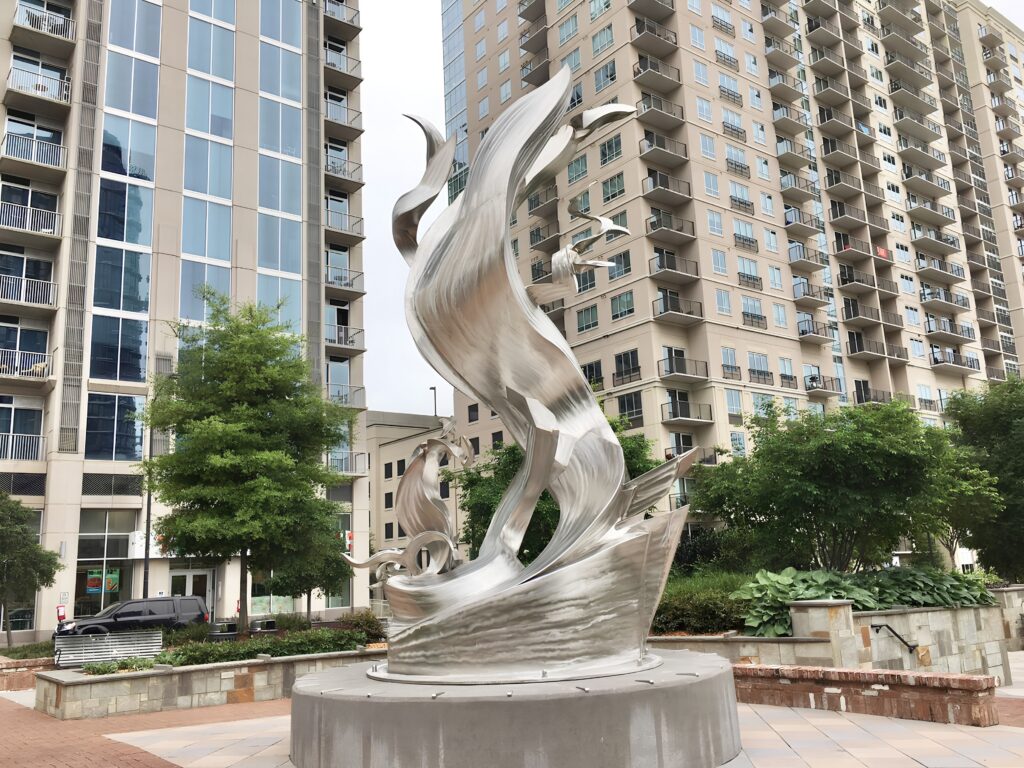
Over the years, Stewart has been involved in numerous public art projects, but for him, “Spiral Odyssey” by Richard Hunt at Romare Bearden Park will always stand out. The 30-foot sculpture, composed of interlocking arcs of polished steel, evokes motion, ascent, and fluidity, and serves as a tribute to Romare Bearden and his Spiral Group, an influential collective of Black artists he co-founded during the Civil Rights era. Hunt, a prolific African American abstract sculptor, was also the first Black sculptor to receive a retrospective at the Museum of Modern Art (MoMA).
“When I was going through art school, training to be a sculptor, he was one of my artistic heroes. So getting to work with him and see his studio, and see that come to fruition was amazing, really kind of like a highlight of my career so far.” Stewart said.
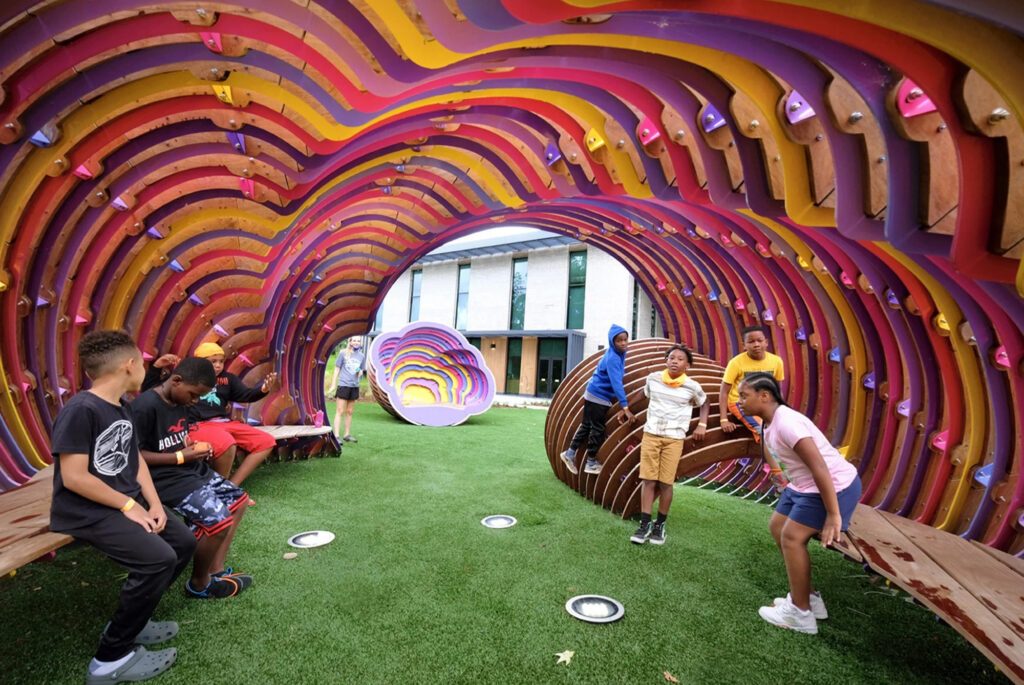
Another more recent work that Stewart says everyone should check out is “Nested Hive” by artists Norman Lee and Shane Allbritton of the design studio RE:site. A colorful play sculpture shaped like a fallen, split-open Hornets’ hive, it sometimes serves as an outdoor auxiliary classroom located at the Eastway Regional Recreation Center.
The creative possibilities are expansive, though, like all public art projects, they operate within defined parameters. ASC’s Regional Artist Directory helps broaden the pool of talented regional artists considered for these lasting works, which help shape and define the city’s historical and artistic identity.
Stewart says he is often asked how artists can get into the public art process and earn their first public art commission. The directory provides that pathway to help build an artist’s portfolio in the public arts space.
You can submit an application for the ASC Regional Artist Directory here. The deadline is June 1, 2026, at 11:59 p.m. Here’s everything else you need to know about the application process.
View this post on Instagram
Read next: